WORKSHOP
DHEAL-COM4MetroXRAI
Community care is a healthcare model that aims to bring care close to citizens, reducing the need to travel to hospitals for basic or mid-level services. The main objective is to improve access to care, especially for people with mobility difficulties in rural or peripheral areas and patients with chronic diseases.
Health professionals increasingly use digital technology to maximize community engagement and effectively implement health interventions, a phenomenon evidenced by the COVID-19 pandemic. Digital technology enables better dissemination of health information, communication, and data management. It has begun to complement the human-based interactions offered by traditional grassroots outreach to better support people in their communities. The DHEAL-COM project has been funded for the establishment of a Life Science Hub at the national level for the development and support of IT and new technology research activities aimed at enabling the improvement of patient monitoring, management, and treatment opportunities at the patient's home or in Community healthcare facilities, according to the needs of primary, secondary, and tertiary users and of the territories.
Building on the success of last year’s event, which featured 8 accepted papers and a comprehensive full-day program comprising a morning research session and an afternoon training session, we propose to sustain this momentum for the upcoming conference. Specifically, the DHEAL-COM4MetroXRAI event will highlight the project results, advance research in digital solutions for community care, welcome external contributions in this area, and present concrete use cases of the exploitation of digital solutions in community care practice. The special focus during the event will be on training healthcare professionals to properly use the latest digital technologies, highlighting the opportunities, risks, and challenges by presenting the legal and ethical dimensions of their application in community care.
ORGANIZED BY
 Christian Esposito
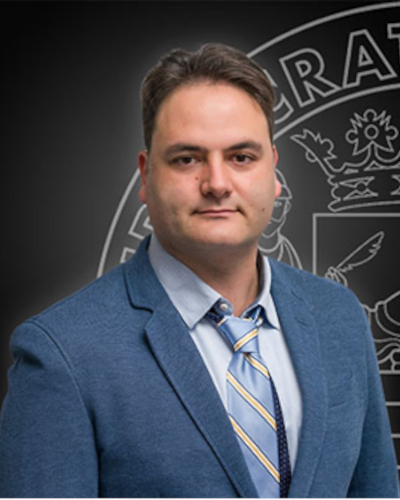
Christian Esposito
University of Salerno, Italy
 Matteo Lenge
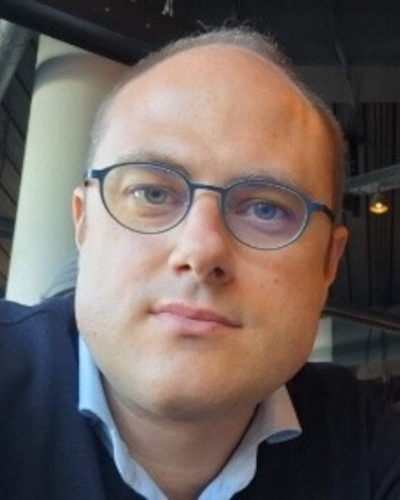
Matteo Lenge
Meyer Children’s Hospital IRCCS, Italy
 Lorena Rossi
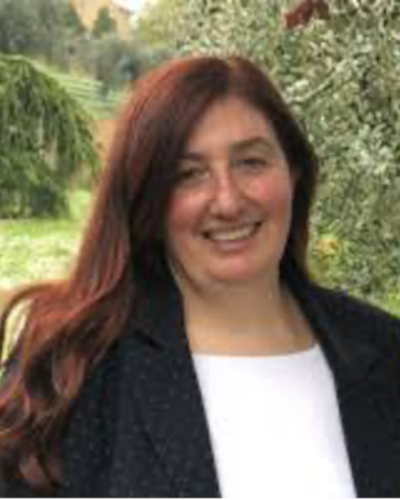
Lorena Rossi
IRCCS INRCA - Istituto Nazionale Ricovero e Cura Anziani, Italy
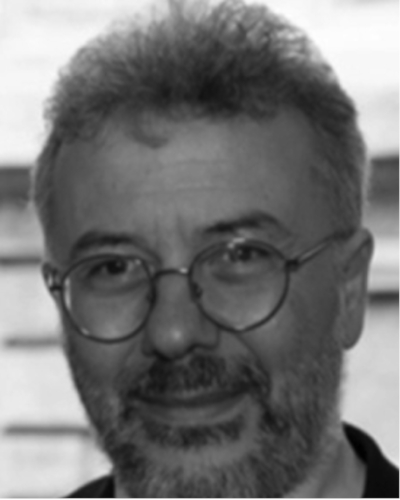 Michele Piana
Michele Piana
University of Genova, Italy
ABOUT THE ORGANIZERS
Christian Esposito received the M.Sc. degree in Computer Engineering from the University of Naples "Federico II", Italy, in 2006, and the Ph.D. degree in Computer Engineering and Automation from the University of Naples "Federico II", Italy, in 2009. In 2019, he joined the Department of Computer Science, University of Salerno, as a tenured Assistant Professor (RTD.B) and from 2022, as an Associate professor of cybersecurity and Internet of Things. He is co-author of more than 100 scientific articles published in international journals, international book chapters, and international conference proceedings and co-editor of various volumes. He has participated in and/or been the principal in vestigator in different research projects with national or international funding, collaborating with various academic and industrial partners on the issues of distributed systems, data modeling, dependability, and infrastructure security.
Matteo Lenge is a biomedical engineer and neuroimaging researcher at Meyer Children’s Hospital IRCCS. He holds a dual PhD in Electronic Systems (University of Florence) and Medical Imaging (University of Lyon). His work focuses on ultrasound imaging, advanced signal and image processing, functional and structural neuroimaging, and brain connectivity, with a particular interest in neurodevelopmental disorders in children.
Lorena Rossi received the M.Sc. degree in Electronic Engineering from the Università Politecnica delle Marche, Italy, in 1988. In 2007, she joined Istituto nazionale ricovero e cura anziani (INRCA), a public scientific hospital and care institute (IRCCS), which operates in the geriatric and gerontological field to protect the health and well-being of the elderly, especially those who are not self-sufficient. She is an expert in ICT-enabled independent living for the elderly, and she coordinates a multidisciplinary team of engineers, psychologists, and experts in HCI and communication, being involved in a series of national and international projects related to t he exploitation of digital technologies for improving care to elderly people.
Michele Piana received the Laurea (cum laude) and Ph.D. degrees in physics from the Università di Genova, Genoa, Italy, in 1992 and 1996, respectively. From 1997 to 1998, he held a post-doctoral position at the Department of Mathematical Sciences, University of Delaware, Newark, DE, USA. From 1999 to 2001, he was a Researcher with the Istituto Nazionale di Fisica della Materia, Genoa; and from 2001 to 2005, he was a Research Associate of numerical analysis with the University of Genoa; and then an Associate Professor of computer science at Verona University, Verona, Italy. He is currently a full professor of numerical analysis in the Mathematical Department at Genoa University. His re search interests include regularization theory for inverse problems, inverse scattering, medical imaging, computational neuroscience, and computational astrophysics.