
THEMATIC SESSION #05
Beyond Oscillations: Fractal Dimension, Nonlinear Dynamics, and the Future of Neural Engineering
ORGANIZED BY
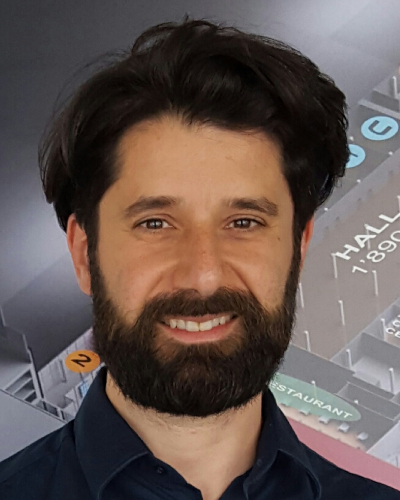 Camillo Porcaro
Camillo Porcaro
Department of Neuroscience, University of Padua, Italy
THEMATIC SESSION DESCRIPTION
Biological neural systems are inherently nonlinear, non-stationary, and multiscale, meaning traditional linear and time-averaged approaches are often insufficient to capture the true complexity of brain activity. Neural signals exhibit a rich interplay between periodic (oscillatory) components and aperiodic, scale-free fluctuations. These dynamics co-emerge and interact, reflecting a brain that operates near criticality—a balanced state between order and chaos that optimizes adaptability and efficiency.
This session highlights Fractal Dimension (FD) analysis as a cornerstone for quantifying the complexity, predictability, and regularity of physiological signals like EEG, MEG, and fMRI. By moving "beyond oscillations," we can explicitly address the interdependence between rhythmic activity and aperiodic, fractal dynamics to develop more robust neurotechnologies.
TOPICS
Key areas of discussion include:
- Fractal-Based BCI Paradigms: Exploring how FD features improve classification accuracy and the decoding of complex brain states;
- Personalized NIBS Interventions: Utilizing FD analysis to tailor non-invasive brain stimulation by inhibiting or activating neural activity in targeted cortical regions;
- Nonlinear Signal Decomposition: Methods for the separation and joint modeling of periodic bursts and aperiodic background activity;
- Clinical Biomarkers: Identifying altered periodic-aperiodic balance in neurological disorders, aging, and anesthesia;
- Neural Criticality: Investigating neuronal avalanches and power-law statistics as nonlinear operating regimes.
This session seeks to bridge the gap between basic nonlinear theory and biomedical applications, establishing a unified bioengineering framework for the next generation of neural interfaces.
ABOUT THE ORGANIZER
Prof. Camillo Porcaro is a distinguished computational neuroscientist who has dedicated his career to pioneering analytical methods for extracting valuable information from non-invasive brain activity measures. His ground-breaking research, published in numerous high-impact scientific journals, has revolutionized our understanding of brain function and offers significant advancements in diagnosing and treating neurological disorders.
Has an impressive record of over 100 peer-reviewed publications, reflecting his relentless pursuit of knowledge and innovation. His work has garnered significant recognition, boasting over 4500 citations, an h-index of 42, and an i10-index of 87 on Google Scholar. As an invited speaker at prestigious research centres and international conferences, he continues to share his expertise and insights with the global scientific community.
His work focuses on identifying functional brain sources and developing nonlinear biomarkers for clinical and engineering applications.