THEMATIC SESSION #07
Adaptive and Wearable Active Brain-Computer Interfaces for Daily Life
ORGANIZED BY
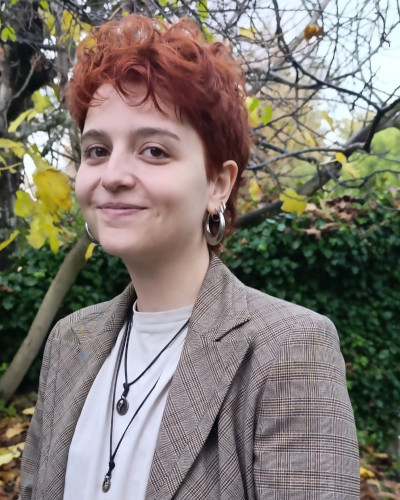 Enza Galasso
Enza Galasso
University of Naples Federico II, Italy
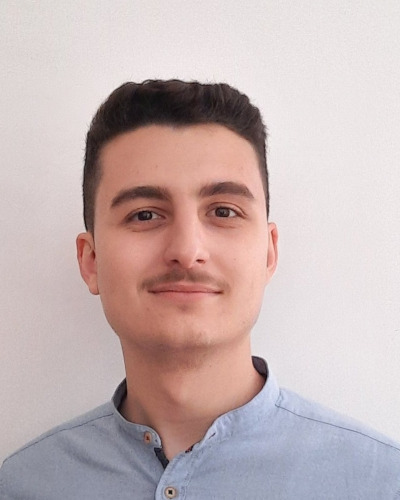 Antonio Esposito
Antonio Esposito
University of Naples Federico II, Italy
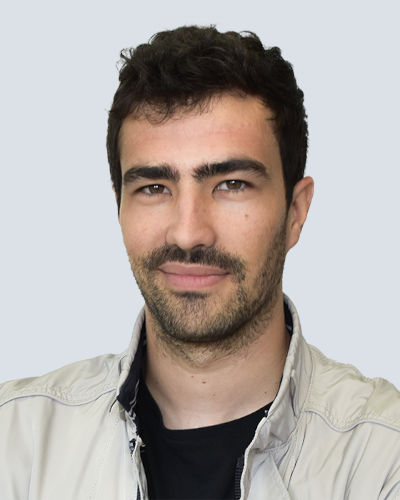 Eduardo Santamaría-Vázquez
Eduardo Santamaría-Vázquez
University of Valladolid, Spain
THEMATIC SESSION DESCRIPTION
This thematic session focuses on recent advances in active brain-computer interfaces (BCIs) enabling robust, adaptive, and user-centered interaction in daily-life scenarios. Active BCIs, particularly those based on motor and mental imagery, offer powerful tools not only for rehabilitation and assistive technologies, but also for broader applications in health, wellbeing, human performance, and human-environment interaction.
A central theme of the session is the challenge of intra- and inter-subject variability, which continues to limit the usability and scalability of BCI systems outside controlled laboratory settings. To address this, the session emphasizes transfer learning and calibration-efficient approaches that reduce setup time, enhance robustness, and support long-term use with wearable and non-invasive instrumentation.
Contributions are encouraged on real-time BCI systems integrating advanced signal processing, adaptive machine learning, and reliable measurement techniques, with a focus on ecological validity and deployment in everyday contexts. Applications may range from rehabilitation and assistive control to neurofeedback, sport and performance optimization, extended reality, and smart living environments.
By bridging metrology, artificial intelligence, and neuroscience, this session aims to foster innovations that make active BCIs practical, reliable, and effective for daily-life use. Researchers, engineers, and clinicians are invited to contribute.
TOPICS
The list of topics includes the following ones:
- Motor and mental imagery;
- Evoked-potential BCIs (ERP, SSVEP, c-VEP);
- Transfer learning and domain adaptation;
- Minimal-calibration BCIs;
- Wearable non-invasive instrumentation;
- Electroencephalography and multimodal biosignals;
- Real-time processing;
- Continual learning;
- Neurofeedback;
- Rehabilitation and assistive technologies;
- Health, wellbeing, and sport;
- Extended reality environments;
- Human-machine interaction;
- Daily-life applications.
ABOUT THE ORGANIZERS
Enza Galasso is a Ph.D. student in Computational and Quantitative Biology (CQB) at the University of Naples Federico II. She received her M.S. degree in biomedical engineering at the University of Naples Federico II in 2024. Her current research interests include enhancing active brain-computer interface performance using neural networks and advanced machine learning techniques.
Antonio Esposito is a Research Fellow at the University of Naples Federico II. He received his M.S. degree in electronic engineering at the University of Naples Federico II in 2017 and the PhD in Metrology at Polytechnic of Turin in 2022. His research activities involve instrumentation and measurement for daily-life brain-computer interfaces. Antonio was also designated “Distinguished Lecturer 2023-2025” for the Instrumentation and Measurement society of IEEE on the topic “Applied metrology for novel human-computer interactions”.
Dr. Eduardo Santamaría-Vázquez is a Research Scientist in the field of brain-computer interfaces (BCIs) at ‘Centro de Investigación Biomédica en Red’, Spain. His work focuses on advancing brain-computer interfaces (BCI), with contributions aimed at improving the accuracy, robustness, usability, and real-world application of this technology. His work spans BCI systems for communication and control, cognitive training and stroke neurorehabilitation, and contributes to EEG biomarker research in areas such as cognitive impairment, migraine, neuropsychiatric conditions, sleep, and anesthesia depth monitoring. In addition, Dr. Santamaría-Vázquez leads the development of MEDUSA© (www.medusabci.com), an innovative platform to accelerate experimentation in BCI and cognitive neuroscience currently used by research groups and companies worldwide.