WORKSHOP
SHIFT: Shaping Human-centered Interaction for Future Technologies
Nowadays, the integration of Artificial Intelligence (AI) with modern Human-Computer Interaction (HCI) technologies and eXtended Reality (XR) offers unprecedented opportunities for innovation. This thematic session aims to explore how AI while acting as a catalyst, interacts with broader HCI methods to enhance user experiences, foster engagement, and address critical Human Factors. The session will examine the synergies between XR, AI-driven personalization, and adaptive systems, alongside non-AI-based approaches to ensure inclusivity. By addressing measurement techniques and methodologies, the session will highlight how HCI researchers and practitioners can advance the field through rigorous evaluation strategies that support various applications in different immersive environment scenarios, such as Rehabilitation, Special Education, Cultural Heritage, and emerging platforms like the Metaverse. This dialogue aims to create a roadmap for designing, implementing, and assessing next-generation HCI systems that balance technological possibilities with user-centric considerations.
TOPICS
- AI-supported personalization in human-computer interaction.
- Measurement of user experience (UX) in immersive environments and AI-supported systems.
- Evaluation of cognitive load in augmented HCI systems.
- Human factors in immersive technologies: measurement approaches.
- Human factors in the design of AI-supported interfaces.
- Evaluation framework for usability assessment.
- Real-time feedback systems in human-AI interaction.
- Emotional, cognitive, and behavioral responses in immersive human-computer interaction.
- Measurement of trust, ethics, and acceptance in AI-supported interaction.
- Multimodal interaction and performance measurement.
- Design for accessibility in next-generation HCI systems.
- Data-driven insights for HCI design and optimization.
- Metrics and validation protocols in AI-assisted HCI.
- Adaptive Interfaces in XR.
- Social Interactions and Collaboration in AI-enhanced XR.
ORGANIZED BY
 Marta Mondellini
Marta Mondellini
National Research Council of Italy (CNR), Institute of Intelligent Industrial Systems and Technologies for Advanced Manufacturing (STIIMA) - Lecco, Italy
 Mario Covarrubias
Mario Covarrubias
Politecnico di Milano, Italy
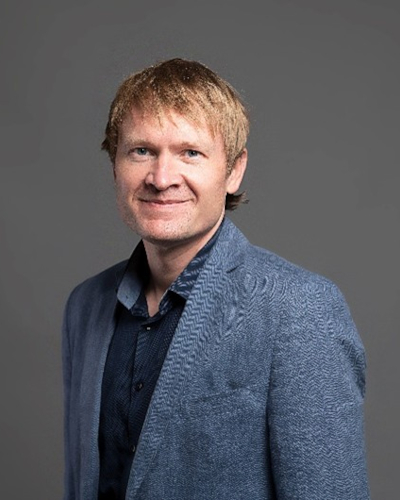 Philipp Klimant
Philipp Klimant
Hochschule Mittweida, University of Applied Sciences, Germany
 Giuseppe Caggianese
Giuseppe Caggianese
National Research Council of Italy (CNR), Institute for High-Performance Computing and Networking (ICAR), Napoli, Italy
ABOUT THE ORGANIZERS
Marta Mondellini graduated in psychology at the University of Milan Bicocca in 2014. She then attended a course in human-machine interaction with a focus on the human factor. She is currently a researcher at the Institute of Intelligent Industrial Systems and Technologies for Advanced Manufacturing and PhD student in psychology at the Catholic University of the Sacred Heart of Milan. She works mainly on the validation of Virtual Environments, with a particular interest in the interaction between human factors and new technologies, focusing on the acceptability of the devices, the sense of presence, and the side effects that immersion in VEs can produce. She works on several regional/interregional/Erasmus+ projects using VR/AV technologies to promote well-being, rehabilitation, and health.
Mario Covarrubias is an Associate Professor at the Department of Mechanical Engineering at Politecnico di Milano and serves as the Head of the Virtual Prototyping and Augmented Reality Research Laboratory at the Lecco Campus. He conducts research activities in the field of Virtual, Mixed, and Augmented Reality and has authored over a hundred articles published in international journals and conferences. His work spans various application areas, including industrial, design, medical, rehabilitation, and special education. Furthermore, he is a member of the scientific committee for leading international conferences on Virtual and Augmented Reality technologies and Special Education.
Philipp Klimant holds a diploma in Electrical Engineering from the University of Applied Sciences Mittweida and a PhD in Mechanical Engineering from the Chemnitz University of Technology. From 2007 to the end of August 2023, he held various positions at the Professorship Production Systems and Processes (formerly Machine Tools and Forming Technology) at the Institute of Machine Tools and Production Processes at Chemnitz University of Technology. He headed the VR department there from 2011 to 2019, most recently as Chief Executive Engineer. On 01.09.2023, he was appointed to the Professorship Virtual Technologies at Hochschule Mittweida – University of Applied Sciences. From February 2016, he was assigned to establish a research group at the Fraunhofer Institute for Machine Tools and Forming Technology IWU. Since 2019, in addition to his University positions, he became Head of Business Unit Process Digitalization and Manufacturing Automation at Fraunhofer IWU. His research interests are in the areas of automation and production engineering, machine and plant simulation, virtual reality and augmented reality, and medical engineering.
Giuseppe Caggianese is a Research Scientist at the National Research Council of Italy (CNR), Institute for High-Performance Computing and Networking (ICAR), and head of the Augmented Human Computer Interaction Research Group (AHCI). Between 2022 and 2025, he has been a Faculty Board Member of the PhD course on “Technology applied to Cultural Heritage” (TEACH) at the University of Calabria, and between 2014 and 2019, he was an Adjunct Professor of Informatics at the University of Basilicata. He received the Laurea degree in computer science magna cum laude in 2010 and the PhD degree in Methods and Technologies for Environmental Monitoring in 2013 from the University of Basilicata, Italy. His research interests include Human-Computer Interaction (HCI), eXtended Reality (XR), and Artificial Intelligence (AI). He primarily focuses on designing and testing advanced interfaces that adapt to specific use cases and user needs in augmented and virtual reality, particularly in the medical and cultural domains. He takes on leadership roles in funded research projects, including Horizon Europe and Italian initiatives, focusing on conversational AI, ICT for health, cultural heritage, and intelligent factories. He authored over 50 scientific papers published in international journals, conference proceedings, and books. He is Associate Editor of the journal Biomedical Signal Processing & Control, member of the Advisory Board for the computer science section of Heliyon Journal (Elsevier), and participates in the program committees of several international conferences and workshops.