THEMATIC SESSION #04
Brain–Computer Interfaces and Neural Signal Processing for Advanced Human–Machine Interaction
ORGANIZED BY
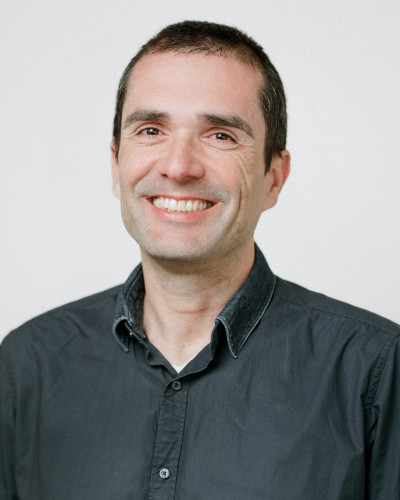 Mario Ortiz García
Mario Ortiz García
ENGINEERING RESEARCH INSTITUTE OF ELCHE – I3E, Brain-Machine Interface Systems Lab (Miguel Hernández University of Elche, Spain)
 José María Azorín Poveda
José María Azorín Poveda
ENGINEERING RESEARCH INSTITUTE OF ELCHE – I3E, Brain-Machine Interface Systems Lab (Miguel Hernández University of Elche, Spain)
THEMATIC SESSION DESCRIPTION
This thematic session is dedicated to recent advances in Brain–Computer Interfaces (BCIs) and neural signal processing for the development of intelligent and reliable human–machine interaction systems. The session will focus on methodologies and technologies related to the acquisition, analysis, and interpretation of brain signals, with special emphasis on non-invasive approaches, data-driven models, and adaptive systems.
Contributions addressing signal processing techniques, machine learning and artificial intelligence for neural data, and closed-loop BCI systems are particularly encouraged. The session will also cover applications in neurorehabilitation, assistive technologies, motor control, and cognitive interaction, as well as validation methodologies and performance assessment of BCI systems in realistic scenarios.
By bringing together researchers from neuroscience, biomedical engineering, and artificial intelligence, this session aims to promote interdisciplinary discussion on the design of robust, user-centered, and scalable BCI solutions, contributing to the advancement of neurotechnology and its translation into real-world applications.
TOPICS
This thematic session includes the main challenges addressed by DONUT (European Doctoral Network for Neural Prostheses and Brain Research) project (funded by the European Union’s research and innovation programme under the Marie Skłodowska-Curie grant agreement No 101118964).
Relevant topics include, but are not limited to:
- Brain–Computer Interfaces (BCIs) and Brain–Machine Interfaces (BMIs);
- Non-invasive neural signal acquisition (EEG and related techniques);
- Neural signal processing and feature extraction methods;
- Machine learning and deep learning for neural data analysis;
- Adaptive and closed-loop BCI systems;
- Multimodal systems combining neural and physiological signals;
- BCIs for neurorehabilitation and assistive technologies;
- Motor imagery, event-related potentials, and neural decoding;
- Performance metrics, calibration, and validation of BCI systems;
- Human factors, usability, and personalization in BCIs;
- Ethical and societal aspects of neurotechnology.
ABOUT THE ORGANIZERS
Mario Ortiz García is an Associate Professor and Senior Researcher at the Brain-Machine Interface Systems Lab, Miguel Hernández University of Elche (UMH), Spain. He received a Msc in Industrial Engineering in 2002 and a PhD in Industrial Technologies in 2016 from the Universidad Politécnica de Cartagena. His research activities include signal processing of EEG signals, neural network applications for signal classification, and brain–machine/brain–computer interfaces. He has also held a visiting position at the University of Houston (USA).
José M. Azorín Poveda is Full Professor and Director of the Brain-Machine Interface Systems Lab at Miguel Hernández University of Elche (UMH), Spain. He holds an MSc in Computer Science from the University of Alicante (1997) and a PhD in Telerobotics from UMH (2003). His research focuses on brain–machine interfaces, neuro-robotics, assistive and rehabilitation robotics. He has been a visiting researcher at the University of Houston (USA) and Imperial College London (UK). His work has been supported by competitive national and international grants, and he is active in IEEE communities and leadership roles.